Purpose Is Never Born in a Moment
20 July, 2026
SEO Experts – AI-Powered Digital Marketing Agency

August 14, 2024

The Real Economics of Digital Marketing: Why a Modest Budget Now Beats a Big One
Most business owners think marketing is an expensive gamble, but what’s truly expensive is bad marketing. Marketing that does not create a plan and burns through cash without tracking what worked. Those who have understood this game have chosen digital media, making it officially the largest advertising segment and crossing the ₹1 lakh crore milestone for the first time. Driven by a massive 26% surge, digital advertising alone has skyrocketed to ₹94,700 crore—now accounting for nearly two-thirds of all ad revenues—while hyper-targeted e-commerce and point-of-sale advertising have surged 50% to ₹22,000 crore. This massive shift isn’t just about big businesses; it also includes the smallest store near you that has recognized the cost-effective power of digital marketing.
Today, every single rupee can be measured, every campaign optimized in real-time, and every result traced directly to its source, allowing modest, disciplined budgets to completely outperform traditional, high-cost guesswork.
The 2026 marketing landscape is brutal in one specific way — buyers research before they buy. Industry data consistently shows that more than 80% of purchase journeys now begin with an online search. If you’re not findable online, you’re simply not in the consideration set. It doesn’t matter how good your product is. The customer has already decided without you.
This is why cost-effective digital marketing is no longer just a budget choice. As it enhances your online presence, it’s a survival mechanism. Affordable visibility beats expensive invisibility every single time.
The numbers make traditional marketing a tough pill to swallow. Spending lakhs on a newspaper ad and just hoping the phone rings belongs in the past.
It’s not just email bringing in massive returns; a optimized Google Business Profile acts as a 24/7 free lead generator. In India, WhatsApp marketing hits customer phones with a 90%+ open rate for pennies, while hyper-targeted social media and search ads turn small daily budgets into predictable sales. With AI now quietly optimizing these campaigns in real-time, you aren’t just spending money—you’re buying measurable growth.
Traditional marketing runs on spray-and-pray. You buy attention from an entire city, knowing 95% will never need your product. Digital works here it inverts this. Using internet marketing services you show your message only to people in a specific pin code, of a specific age, with specific interests, who searched a specific term in the last 24 hours.
The deeper advantage is speed. Dashboards update live. If your cost per lead climbs past what you can afford by Day 3, you pause the campaign on Day 3 — not at month-end, when the money is already gone. Pausing a losing channel within hours saves more than most cost-cutting exercises ever will.
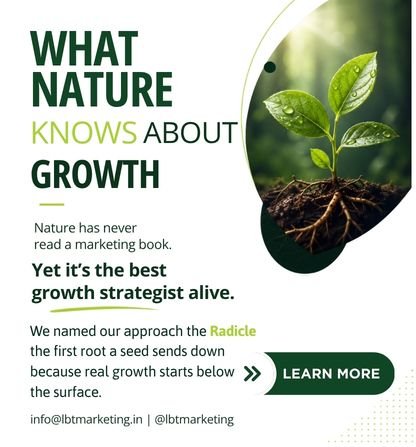
Paid ads stop the moment you stop paying. But a well-written blog post, a properly optimised service page, a high-ranking pillar article — these keep pulling traffic for years. Our R100 MSME digital marketing products are built on this foundation. Your every penny strengthens your roots, generating leads in 2027 with zero additional spend for your consistent 2026 activities. This long-term value creates a powerful base for sustainable growth.
And this is where the compounding effect begins. The asset compounds one tweak at a time. A meta description rewritten for higher clicks. A landing-page button moved up. An email subject line A/B tested. None feels dramatic alone. But across six months, these quiet wins routinely double or triple the ROI of the same budget. This unglamorous work is where real cost-efficiency actually lives.
Different channels suit different stages of a business, but a few consistently punch above their weight for budget-conscious owners. SEO is the long game with the highest payoff per rupee, building visibility that doesn’t depend on daily ad spend. Content marketing, especially long-form articles answering real customer questions, lowers your cost per lead while building topical authority. Read this -> To Learn The Benefits Of Digital Marketing
Email and WhatsApp marketing — particularly powerful in India, where WhatsApp has crossed 600 million users — give you direct, opt-in access to people who already trust you, at almost zero distribution cost. Organic social media builds community before you ever pay to amplify it. And paid ads, used strategically once the foundation is built, can scale a working system rather than gamble on an unproven one.
India now has over 7.83 crore Udyam-registered MSMEs as of early 2026 — and most still run on word-of-mouth and walk-ins. That’s the opportunity: in almost every local segment, your competitors are still under-marketed online. A business in Vadodara, Surat, or Coimbatore can now reach customers across the country for less than the cost of a single full-page newspaper ad.
A practical starting range of ₹5,000 to ₹15,000 a month — put into a Google Business Profile, basic local SEO, two or three social channels, and a simple email or WhatsApp follow-up — is enough to build a measurable presence in 2026. There has never been another moment in business history where this kind of leverage was available at this price.
The mistake most owners make is confusing “cheap” with “cost-effective.” They are not the same. Cheap means lowest invoice. Cost-effective means highest return per rupee. The first leads to ₹999 logo packages and bots posting on Instagram. The second leads to a real business asset.
A genuine cost-effective digital marketing strategy follows a sequence: build the foundation first — website, SEO, Google profile, content base — and then layer paid amplification on top. Paid ads work brilliantly when they’re scaling something that’s already converting organically. They become an expensive bandage when used to compensate for a broken foundation.
This is the principle of investing in systems before spending on noise. It’s also why the businesses that grow fastest are usually the ones who refused to skip the boring early steps.
The cost-effective power of digital marketing services isn’t about spending less. It’s about every rupee carrying more weight, doing more jobs, and continuing to work long after you’ve stopped pushing it. Traditional marketing was a one-time transaction. Digital marketing — done with patience, structure, and intent — is a system that pays you back in compounding instalments.
The businesses winning in 2026 aren’t the ones with the biggest budgets. They’re the ones who understood that a modest budget, applied with discipline to the right channels, beats a large budget sprayed across the wrong ones. That’s the real economics of growth in this decade. If you’re ready to stop guessing and start building marketing that actually compounds — let’s talk.
FAQ
Getting the highest return per rupee — not the lowest invoice. In practice that means building your organic foundation first (SEO, content, Google profile, email/WhatsApp) and layering paid ads on top only once something is already converting.
A realistic starting range is ₹5,000 to ₹15,000 per month, scaled up gradually as each channel proves its ROI.
Email consistently tops the charts at roughly ₹36–₹42 of value per rupee spent. SEO doesn’t win on a single number, but it compounds — its return keeps growing for years after the work is done.
Yes — it’s measurable, targetable, and scalable on small budgets, while traditional marketing forces flat upfront spends with no way to track what worked.
Paid ads can show signals within days, but that’s rented attention that stops the moment you stop paying. The real, compounding fruits of digital marketing — organic visibility, authority, and a steady lead flow that costs almost nothing to maintain — typically take six to nine months to mature. The smart sequence is to build that foundation first and avoid leaning on paid ads at the very start of the journey.